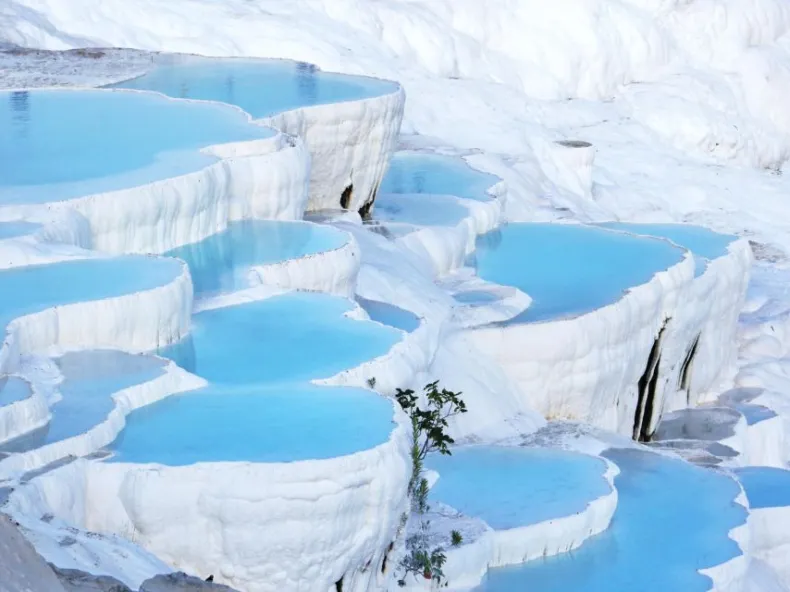
The sweet spots for Pamukkale are spring and autumn: comfortable walking weather for Hierapolis, softer light on the terraces, and crowds a notch below the summer peak. Summer works well too — the tour is built around an early start precisely so you reach the terraces before the day's fiercest heat — and winter is the quiet season connoisseurs quietly prefer, with tours running Monday to Saturday from December to February and daily the rest of the year. Here is the honest season-by-season strategy.
Spring and autumn: the sweet spots
The shoulder seasons give you Pamukkale at its most agreeable. The long walking day — barefoot through the terrace pools below, then across the ancient streets of Hierapolis above — is simply more pleasant when the sun is friendly rather than fierce. The light is kinder to photographers too: white calcite under a softer sky photographs with texture instead of pure glare, and the pools hold the blue tones that made you want to come in the first place.
These months also suit the travellers who have the least slack in their energy budget — families with young children and anyone wary of heat. The drive over the Taurus mountains is greener, the site is busy but not heaving, and the free-time block after lunch feels like a stroll rather than a survival exercise. If your holiday dates are flexible, this is where to aim.
Summer: how to make the peak work
Summer is when most people are on the Antalya coast, so summer is when most people see Pamukkale — and with the right tactics it works well. The formula's early start is your main weapon: breakfast happens on the coach during the morning drive, so you arrive in the late morning having lost nothing to logistics, and you take the terraces before the day reaches full temperature. The warm, shallow water you wade through is itself a pleasant paradox underfoot on a hot day.
The tactical rules are simple. Hat, sunglasses and serious sunscreen, because the white slope reflects light from below as well as above. Wear your swimsuit under your clothes so the optional dip in the Cleopatra Antique Pool costs you no changing time. Pace Hierapolis rather than sprinting it, and put your cash toward cold drinks without guilt — drinks are the one thing at meals you pay for yourself. High season also means the site is at its liveliest around the middle of the day; treat that buzz as part of a world-famous site's character rather than a flaw, and the day stays a pleasure. The ultimate guide has a full summer checklist.
Winter: the connoisseur's secret
Winter Pamukkale is the version almost nobody plans for and almost everybody who sees it raves about. The crowds thin dramatically, the terraces stand white against moodier skies, and the spring water — thermal at its source — keeps the barefoot wade perfectly bearable when the air has a bite to it. Hierapolis with space to yourself is a different monument altogether: you hear wind in the theatre instead of forty languages.
The practical notes: tours run Monday to Saturday from December to February, daily from March to November, and the booking calendar shows live availability either way. Pack a warm layer for the coach and the exposed hilltop, and check the light — winter days are shorter, which the day's rhythm already accounts for. Entrance tickets remain official and seasonal in every month; they are always bought at the gates, and this page explains how that system works.
Match the season to your style of travelling
If you travel with young children, aim for the shoulder months when the school calendar allows: the same shallow warm pools, gentler sun on the exposed slope, and a calmer free-time block. If you are chasing photographs, spring and autumn light flatters the calcite, but winter delivers the emptiest frames and the moodiest skies — bring the warm layer and call it a fair trade. Heat-averse travellers should simply avoid the deepest summer weeks and take any other month with a clear conscience.
And if summer is the only window you have, take it without hesitation: the early start, the hat-and-water discipline and the swimsuit under your clothes convert peak season into a perfectly good Pamukkale day, as the fullest coaches of the year quietly prove. Whatever the month, two constants hold — the thermal water underfoot and the three meals bracketing the road. The season changes the light and the crowd; it never changes the structure of the day.
So when should you go?
Go when you are here. That is the honest answer — every season produces a genuinely good Pamukkale day, because the format flexes around the calendar: early starts against summer heat, warm thermal water against winter air, and three included meals in every month. Spring and autumn win on comfort, summer wins on convenience for most holiday dates, winter wins on solitude. Whichever season your holiday lands in, the price never moves — a flat €50 per person, infants 0–3 free — and you can check live dates and reserve online for free, paying only on the day.