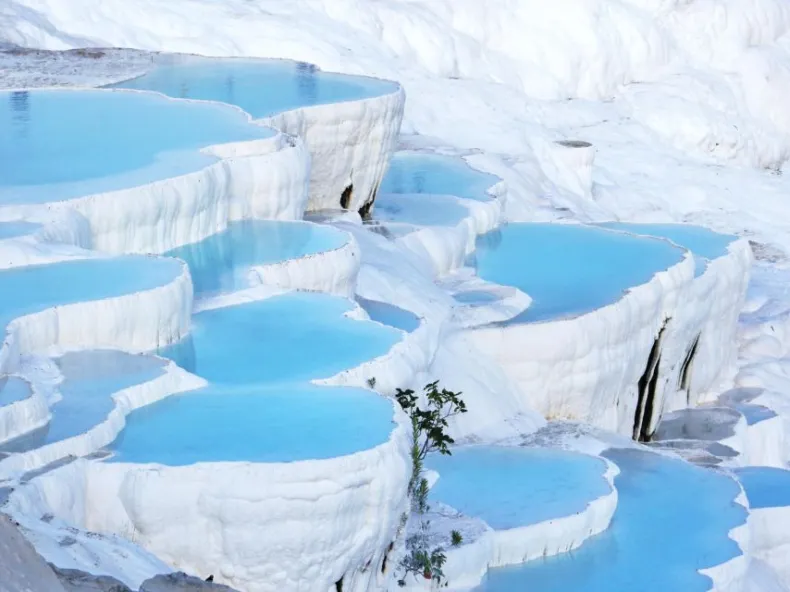
The precise answer: you wade at the terraces, and you swim at the Cleopatra Antique Pool. The famous white travertine pools are shallow — warm water you walk through barefoot, ankle-to-knee territory, not swimming water. Actual swimming happens above them, in the Cleopatra Pool, a thermal pool with submerged ancient marble columns; it is entirely optional and has its own separate ticket, bought on site. Almost every disappointment ever filed about "swimming at Pamukkale" comes from mixing those two up, so let us keep them properly apart.
The terraces: wading, not swimming
The travertine terraces are the postcard — a hillside of white calcite basins holding shallow sheets of warm thermal water. In the designated open section you cross them barefoot, shoes carried in a bag, because bare feet are the site rule that protects the soft calcite. The water level varies pool to pool and season to season, but the register is constant: this is wading country. You stroll through it, stand in it, sit at a pool's rim with your feet in it, photograph the blue-on-white until your storage complains.
What you do not do is swim, dive or lounge full-length like it is a hotel pool — the open-section pools are too shallow for it and the wardens will move you along. The good news: wading here is not a consolation prize. Warm water over rippled living stone, with the plain of Denizli unrolling below, is the sensation people actually cross continents for. The travertines page covers how those basins built themselves.
The Cleopatra Pool: the real swim
Above the terraces, inside the ancient city, waits the swim that earns the name: the Cleopatra Antique Pool. This is a proper thermal pool, famously warm in every season and startlingly clear — and scattered across its floor lie sections of fluted marble columns from Hierapolis, toppled by earthquakes long ago. You swim over and between two-thousand-year-old architecture. There is no other pool experience quite like it, which is why it has carried a queen's name for as long as anyone can remember.
The practical mechanics matter. The pool sits inside the site but is a separate business from the entrance: swimming is optional, and it has its own ticket, bought at the pool itself — never included in the site entrance, never included in our tour price, and never quoted by us in advance, because the tariff is official and seasonal. Our Cleopatra Pool pricing page explains that system honestly. On the day tour, the swim fits naturally into the free-time block after lunch; a swimsuit worn under your clothes and a towel in your bag turn the decision into a two-minute one.
What each water actually feels like
The terraces feel like geology being friendly: warm, shallow water sliding over ridged calcite, sky-blue against white, your feet doing the sightseeing. It is sensory, gentle and strange in the best way — children treat it as the day's main event, and adults quietly agree with them.
The Cleopatra Pool feels like a bath left running since antiquity — deep enough to float freely, warm enough that nobody hurries out. The floor beneath you is not tile but tumbled column drums and worn marble, and the effect on first-time swimmers is always the same: a grin, then a slow circuit hunting for the best piece of sunken architecture. If you swim anywhere this year with a story attached, make it here.
The etiquette that keeps both waters working
Both experiences survive on a few small disciplines, and knowing them in advance marks you out as a traveller rather than a tourist. On the terraces: stay inside the open section, keep to wading pace, and resist the closed pools however empty and photogenic they look — the roped-off basins are regrowing their white calcite skin, and the wardens take the ropes seriously. Shoes stay in the bag from first step to last; the barefoot rule has no exceptions for tired feet or expensive sandals.
At the Cleopatra Pool: the ticket is bought at the pool, the swim is genuinely optional, and the courteous move is to enjoy your soak without treating the submerged columns as a climbing frame — they have survived earthquakes and two thousand years, and the pool stays magical precisely because everyone treats it as the antique it is. None of this is burdensome; it is simply the small print of sharing a UNESCO site with the centuries. The logistics, meanwhile, fit in one sentence: wear the swimsuit under your clothes, carry the towel in the bag.
Making the choice on the day
Here is the honest advice: do both, in their own registers. Wade the terraces slowly — that costs nothing beyond the official site entrance paid at the gates. Then, in the free-time block, decide about the swim with your own eyes on the water. Plenty of guests plan to skip it and buy a ticket within minutes of seeing it; nobody has ever looked less than delighted climbing out. The day tour makes the whole decision easy — coach, licensed guide, insurance and three meals for a flat €50 per person, with the swim as your optional finale. Reserve the day online for free, pack the swimsuit, and settle the question standing at the pool's edge.