At most archaeological sites, the museum is a modern box parked next to the ruins. At Pamukkale it is a ruin — the Hierapolis Archaeology Museum occupies the restored halls of a great Roman bath building, so its first exhibit is the architecture around you. Massive stone rooms that once steamed with the spa city's bathers now stand cool and shadowed, full of marble.
Inside wait the finds that the open-air site cannot safely display: carved sarcophagi, statues, reliefs and case after case of smaller objects recovered in the excavations. The museum keeps its own ticket, bought at its door and — like every entrance here — excluded from the €50 tour price, which covers your transport, licensed guide, insurance and three meals. Whether you go in is a free-time decision, and this page should help you make it.
A Bath That Became a Museum
There is a neat historical loop at work. Bath complexes were among the mightiest buildings a Roman city raised — thick walls, huge vaulted halls, stone built to hold heat and crowds — and that very solidity is why this one outlasted the town around it. Restored, roofed and rearranged, the halls turned out to be natural galleries: high, cool and generous with space.
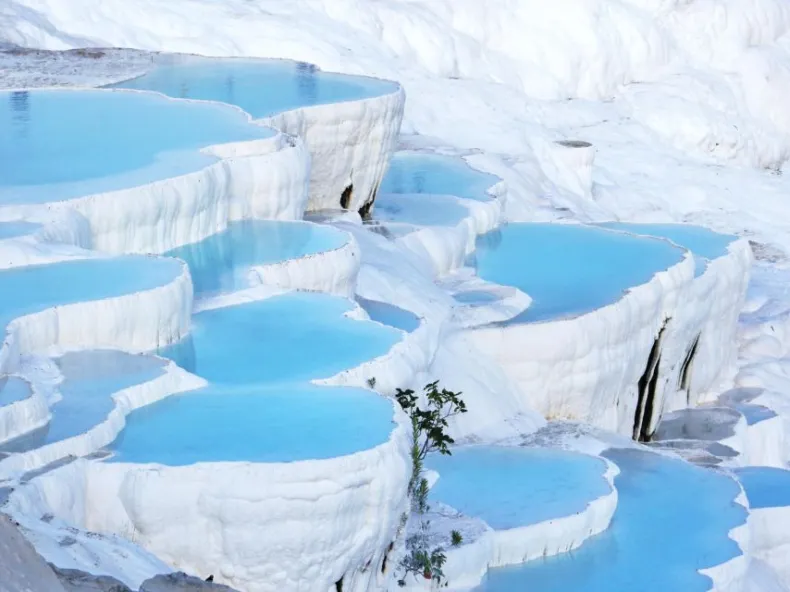
So the building made for the hot water now explains the city the hot water built. You walk through rooms where ancient bathers once moved between pools, and the same walls now shelter what their world left behind — the neatest change of career any ruin at Pamukkale has managed. The springs themselves still run outside, whitening the travertine terraces a short walk away.
What Waits Inside
The heavyweights are the sarcophagi and tomb sculpture, brought in from the city's vast cemetery — carved marble chests whose detail survives far better under a roof than out in the weather. Around them stand statues of gods, emperors and citizens, architectural fragments and reliefs recovered across the site, including pieces connected with the theatre's sculpted decoration.
The quieter cases reward patience most: coins, glass, oil lamps, jewellery and household objects from the digs. Monuments tell you what Hierapolis wanted to be remembered for; these small things tell you how it actually spent its Tuesdays — and that is the half of the story the open-air ruins cannot give you.
The Ticket and the Free-Time Triangle
The museum runs on its own ticket, paid at its entrance on the day. We print no amount, because the tariff is set officially and revised like every fee at the site — the full ticket picture is laid out here — and nothing about it is ever folded into the tour price.
Your free-time block then holds a pleasant three-way choice: the museum's marble, the optional swim over sunken columns at the Cleopatra Pool, or simply more unhurried barefoot time in the terrace pools. Lovers of carved stone should give the museum a firm yes; travellers who came for the water can skip it with a clear conscience — the guide will happily advise either way.
Fitting the Museum Into the Tour Day
The museum sits inside the site you already visit on the full-day Pamukkale tour from Antalya, so no extra logistics are needed — just part of your free time and the on-site ticket. The day itself stays at €50 per person with meals, guide, insurance and hotel transfer included, from every pickup area along the coast. Reserving online is free, and nothing is paid before the day of the tour.